

Equipment consultancy
Make confident, compliant investments without costly mistakes with our expert engineer-led support.
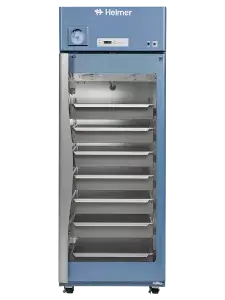
Maintain reliable storage conditions for blood and blood components.
Expert guidance and nationwide support to help you choose the right solution for your facility.
Protecting blood products requires precise, dependable temperature control. Even small fluctuations can compromise safety, making consistent storage conditions essential in regulated healthcare environments.
Our range of high-performance blood bank refrigerators from trusted global manufacturers delivers reliable +2°C to +6°C storage, helping hospitals, laboratories, and blood banks maintain compliance, audit readiness, and operational confidence.
No products found in this range. Try a different category or range.
With over 450 years of engineering expertise, we guide equipment selection and provide custom set up and calibrations for confident and compliant operations.
Expert support to select the right scale for your environment and workflow.
Installation, configuration, and training for full operation from day one.
UKAS or traceable calibration for accuracy and compliance.

Start by considering how much blood you need to store, the available space in your laboratory, and whether continuous temperature monitoring or alarm systems are required for compliance. Our team can help you review your storage volume, regulatory requirements, and workflow to recommend a suitable refrigerator for your facility.
Important features include precise temperature control, uniform temperature distribution, audible and visual alarms, secure access, and reliable temperature monitoring. These features help protect stored blood products and support compliance.
Yes. Plasma freezers are designed for frozen plasma storage at much lower temperatures, typically -30 °C or below, while blood bank refrigerators store whole blood and blood components between +2 °C and +6 °C.
In many healthcare and laboratory environments, blood bank refrigerators are validated to confirm they maintain the required temperature range. Validation typically includes installation checks and temperature mapping to support compliance with MHRA blood storage guidance and demonstrate audit readiness.
Let’s discuss how we can help to achieve your goals.